
Part 1: The Opportunity Cost of Your Time
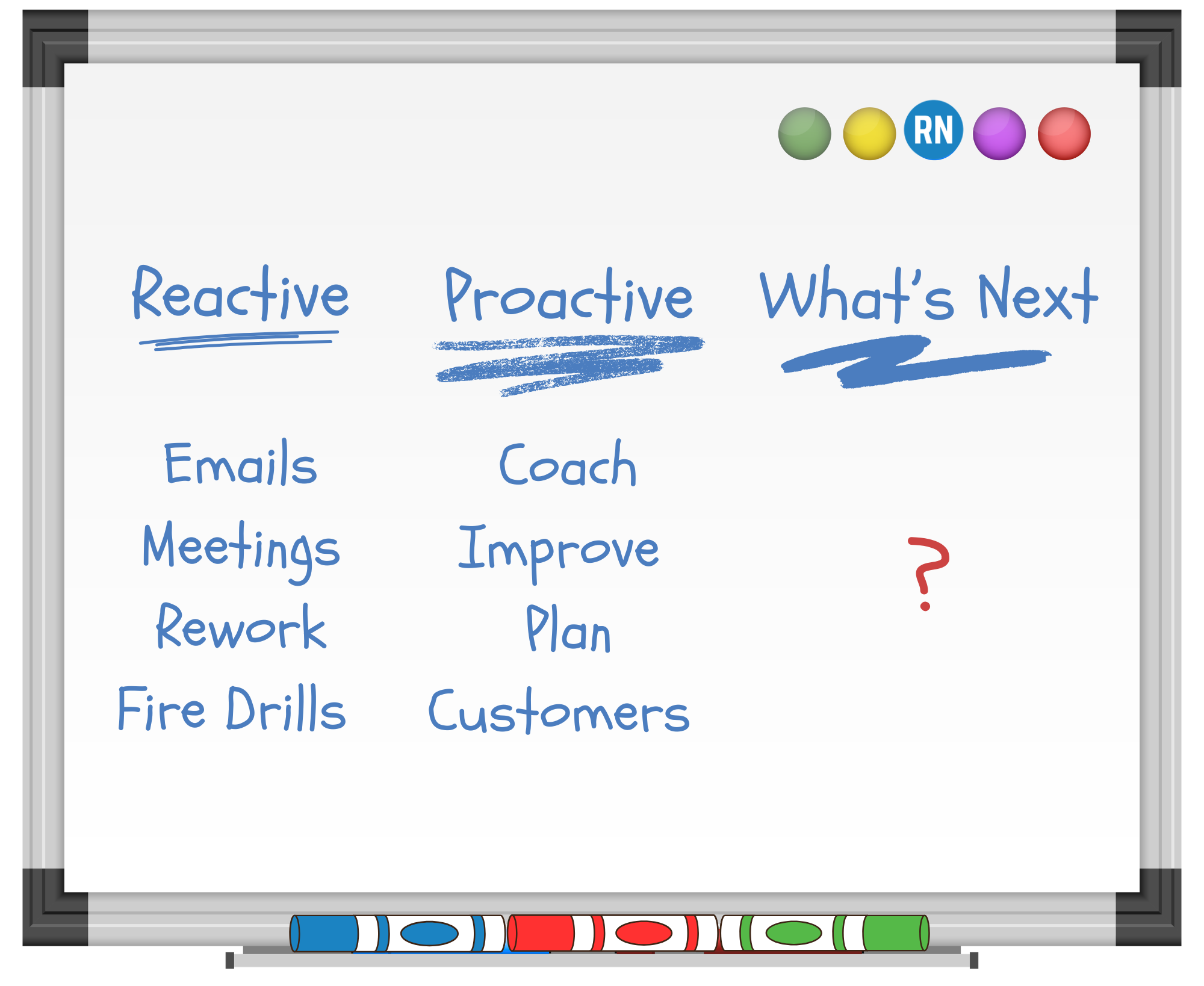
Over the years, one of my favorite conversations during one-on-one coaching meetings had very little to do with sales goals, budgets, or KPIs. Most of these were problem solving conversations to address a specific challenge or bottleneck.
Before we started solving the problem, I would ask two questions.
“What percentage of your time is reactive versus proactive?”
Most people would pause before answering. I don’t think it is a question they had given much thought to.
Then I’d ask the follow-up.
"If you could spend more time doing the things that really make a difference, what percentage would you want it to be?"
I don’t remember anyone ever telling me they wanted to spend more time in reactive-mode putting out fires, solving urgent customer issues, and addressing other problems needing attention.
Most wanted more time to think, improve a process, coach a teammate, build customer relationships, solve problems before they happened, or simply work on the business instead of constantly working in it.
Those conversations often led me to another question that my teams probably heard more times than they cared to hear.
“What is the opportunity cost of your time?”
Economists have used the phrase opportunity cost for years. It’s the value of what we give up when we choose one thing over another.
I changed that concept in a different way, morphing it to help me get the person I was working with thinking differently.
Every hour doing these things:
Searching for information...
Correcting mistakes...
Reworking an order...
Sitting through a meeting that didn't create meaningful outcomes...
Or reacting to a problem that could have been prevented...
Meant we weren't able to do these things:
Coaching and supporting a teammate.
Calling a customer.
Improving a process.
Developing a new idea.
Solving tomorrow's problems before they become today's emergencies.
Building stronger relationships across departments.
I seemed to move toward the same challenge in every business:
Finding better ways for people, processes, and systems to work together.
We documented and trained SOPs.
We improved communication between departments.
We implemented schedules and systems.
We clarified roles and responsibilities.
We measured performance.
We challenged ourselves to continuously improve.
None of those efforts were about creating busier people.
They were about finding and creating capacity. Capacity to contribute in ways that mattered more.
I've been thinking about those conversations again, especially as I learn more about AI and the possibilities it creates for leaders and organizations.
I’d like to explore that thought in my next blog: The Opportunity Profit of Your Time
